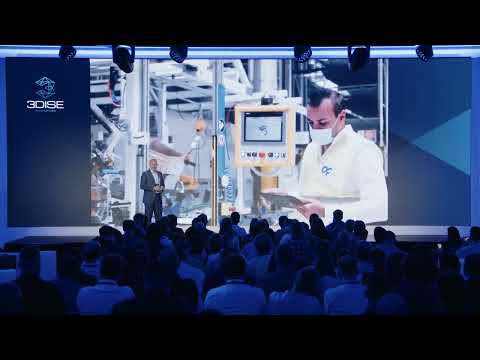

Michal Ukropec (twinzo), Szymon Bloch (Scan 3D), Lukáš Altman Kousal (Škoda Auto) and Johannes Hotz (Leica Geosystems) discuss what a digital twin really is, why adoption is slow and how to get started. The panel agrees that a scan or a BIM model alone is not a digital twin, that projects should start small with one clear use case and a fast return, and debates when tracking people in a twin is acceptable.
“we talk about, uh, digital representation, maybe sometimes digital shadow, but it's a long way to digital twin from my side.”
“because BIM is not, is not a digital twin. A scan is not a digital twin.”
“So you have to find the value for the customer so they can argue with their management.”
No, according to Johannes Hotz: BIM, a scan or a document database alone is not a digital twin; on large sites the twin comes from constantly updated scans used to check progress, budget and timelines.
Michal Ukropec points to quarterly reporting, because corporates expect a return within one or two years, while Szymon Bloch adds that pilot projects alone can take months or a year.
Johannes Hotz and Lukáš Altman Kousal advise starting small and growing step by step, and Michal Ukropec recommends one simple use case with an easy return, backed by the right people at the top and on the shop floor.
Transcribed automatically (ElevenLabs Scribe) and lightly edited. It may contain small errors. Click a time to play the video from there.
Michal Ukropec: I already had done my pitch, so no, no need for that. Sorry, sorry. This one will be yours.
Szymon Bloch: Okay. Thanks. Uh, I'm Szymon, uh, Bloch from Scan 3D. That's, uh, we are from Poland. Uh, at the moment we are one of the biggest company in Poland who provide, uh, 3D scanning above the ground and underground.
Szymon Bloch: We inspiring company to use this data from the scanning, from the BIM modeling to be useful, to bring benefits for, to, to your company to build digital twin. From my side, it's still not existing very well. Uh, we talk about, uh, digital representation, maybe sometimes digital shadow, but it's a long way to digital twin from my side.
Lukáš Altman Kousal: Okay. Uh, hello from my side. Uh, my name is Lukáš Altman Kousal, and I am working in Škoda Auto, and where I am the expert manager for pressing process and digitalization. And my mission and vision, it's, uh, to make a dig-digitalization to help machines and people, uh, in the production, especially in the, uh, press shop. And my-- The biggest goal, uh, right now it's to build a digital, uh, twin for industry or building and create a localized notification inside the building through the digitalization.
Matthew Byrd: Awesome.
Johannes Hotz: Hello, my name is Johannes Hotz. Um, I'm almost thirty years in the geospatial industry. I work for Leica Geosystems, which is part of the Hexagon, um, group. I'm working already twenty-five years for Leica Geosystems, so, um, a dinosaur maybe. At least I feel sometimes when I s-- always talk to this young generation.
Johannes Hotz: It's, it's-- But this is always a very nice, uh, experience to talk to people fresh from university, young graduated, different perspectives, different angles. I love that one. I look basically after, um, the BLK ARC, that's a product, um, a mobile laser scanner on a global base, um, mainly on, on robotics. So for example, the Boston Dynamics Spot. And here it really captures one, one key, key solution to update a digital twin.
Johannes Hotz: Maybe I just throw in how to keep a digital twin up to date.
Matthew Byrd: Mm.
Johannes Hotz: And that is where very often the Spot with autonomous laser scanning, um, can play a crucial role.
Matthew Byrd: I have a feeling, uh-
Johannes Hotz: So thanks for being here.
Matthew Byrd: Yeah, I, I have a feeling we'll dig into some of that as we converse through. Um, so let's just start, I think, really from the beginning. And also, uh, again, maybe this is just how I run panels, I don't direct all my questions to one person. I really like that let's, let's converse, let's throw a question out there, and feel free to play off of each other, um, as well. So the first thing I wanna ask is like, what, what are the most, uh, common misconceptions right now- ...
Matthew Byrd: around digital twin? Um, I, I loved your, your presentation earlier. Uh, "Is a scan a digital twin? Is a model? Is data?"
Matthew Byrd: Um, I, I, I feel like digital twin is really specific. You know, it depends on the application, depends on the industry, depends on the company's use case. But what are some of the most common misconceptions that we see floating out there right now?
Johannes Hotz: You get a digital twin very cheap.
Matthew Byrd: The cost.
Michal Ukropec: It's not a misconception. It can be done- ... with an iPhone.
Johannes Hotz: Are you sure? Is it just capture some data? It's not involving into business processes as well?
Michal Ukropec: It depends on the digitization level of the company. If the company is living in nineteenth century, it is very costly. But if the company is regularly investing into their digitization, the, to, to have this done is, is pretty easy, but they have to be ready. So if they have technological debt, uh, well, that's a problem. But it's a debt, and this has to be paid.
Szymon Bloch: I also see that, uh, the companies, if they hear about digital twin, they are s- really scared. That's... This is the something what is really crazy because you have huge assets, huge fabrics, and you don't know what you have it, uh, how you can improve. And this is something what we together here, where we sitting here and there, inspire people. We need to talk more and don't start talking the digital twin like a pilot.
Szymon Bloch: Maybe we can start like pilot, but let's start to capturing data. Let's start to bring this data like update data. That's, you have to trust this data. The data should be good. After that, if company, what you said, Michael, have it guy who understand what is the benefits and inside the company is the, are, are the people who can inspire all people in the company, this is the huge value.
Johannes Hotz: Maybe we have to clarify what is a digital twin, huh? Before we continue.
Matthew Byrd: I, that was my first question, and then I canceled it 'cause I was like, "We kind of hit on that almost earlier." But-
Johannes Hotz: Maybe first, we have, we have a customer or a user of a digital twin. So what is your goal? What is your, um, reach, what to achieve with a digital twin? What it, what-- When do you say, when would Škoda say, "We have a digital twin"?
Lukáš Altman Kousal: Yeah. Uh, it's, it's good question, and, uh, I like to answer, like, the digital twin, because when I mention it in our company, "Yeah, I want a digital twin," and they also ask me, "Well, what is it?" And for them, the first is how it looks and what is, what is it. Then, uh, the second question is the benefits, and the benefits is the most. And, uh, for me, from, uh, my point of view, it's to have a, like, twin of the, of the, uh, the building because I am focusing about the facility management, about the energy management.
Lukáš Altman Kousal: And the processes is the, in the beginning, it's a hard topic because you have to, like, scan all the processes and especially, uh, the Škoda Auto is a huge company, and the processes is really long and huge. So it's better to start with something small and build it. So this is, uh, for me right now, the digital twin, uh, it's the, like the mirror of, uh, situation what it's there, but not about the exactly the processes, but about the data, about the consumption data, like from the energy management and also, like, point of interest or, or, uh, let's say, what it's happening, uh, inside throughs, uh, throughs the waste management and so on. This, like, uh, separate parts. And in the next steps, I will go through the processes because then I can make a saving much huger.
Lukáš Altman Kousal: So this is like, uh, for me, it's, I'm like calling it a digital twin, uh, for me is a localized notification, uh, through the, uh, collecting data because I am al-already collecting data more than ten years, so I have a huge database. So, and I want to give the people the data more transparency because, for example, I have, like, some water leakage somewhere, and I know the, the number of the, the measures device.
Johannes Hotz: Yeah.
Lukáš Altman Kousal: But to be honest, I don't know where is it in the building. So 2D layouts, it's really old, and nobody it's updating. So this is... And I think about the updating, we will talk, uh, later, and also I see the question there, so we can, like, answer it later.
Matthew Byrd: Yeah. F- uh, that is a great reminder, too. Feel free to submit questions, um, and we'll probably pull some of these in even during the panel as well. Um, what's the f- what's the first thing that comes to mind as far as, uh, a barrier as to why, uh, digital twin adoption is, is, you know, it's not further along than it is now? I think there's a lot of interest.
Matthew Byrd: What stops companies from really adopting and pushing in?
Johannes Hotz: So we, at Hexagon, we did a survey with senior managers in our, in our customer base, and eighty percent see the digital twin as important or very important. So senior managers, uh, they have a little... You have support. The challenge is, and I f- I love what you say, "Start small." Huh?
Johannes Hotz: Don't say, "Overall, Škoda, all facilities on a global base, we have to do it now." Huh? I think the step-by-step approach is, I think, the right thing. To slowly grow, to maybe say, "Okay, we don't have a business integration with our assets into SAP yet." And this maybe comes later because that's, for me, part of a digital twin.
Johannes Hotz: But really step by step, grow, learn, experience what are the benefits. I think people tend to overdo it. Uh, ver-very bad to say, I don't like working groups. Uh, but a lot of people come from all different kind of, um, um, businesses from an organization, and every has an idea, and every pro- one throws in what he needs. And then at the end, you have a huge requirements list.
Johannes Hotz: And this requirements list, then you do the calculations, and at the end, you go to your CEO or CFO, my, my only CFO and say, "Digital twin will cost us this, this, this." No. Now we-- You overdo it.
Matthew Byrd: Mm.
Michal Ukropec: But this is not a European specialty. If you get an RFQ from, from the Middle East, same sheet, just different money. Because they, they... "You know, Michal, we want a solution where we can plan the whole cities and you know how people move, and then the operations, and then the construction, and the ma- the planning and, and checking how the, uh, what the Indians are doing." So, so sorry guys, but the, the use of an Indians.
Michal Ukropec: Like, b- o- okay, but you, you don't know that there is not a single solution which can cover all these, all these use cases. "No, there, there must be a solution." Okay, good luck with that. And then we s- then we, then we step away because this can't be done. Even NVIDIA is failing with, with, with, with this.
Michal Ukropec: This, this can't be delivered. But when we talk about the, the obstacles, the problem is the quarter reporting in all the corporates. Uh, so, so the, the mindset is looking on, on short-term, uh, results and achievements, and that's the problem with the, with the large project because there is, there is no way that there would be any saving in like two or three years. But all these corporates needs to see the money in the, in the ROI calculation like one year, maybe two years in better cases. So you have to find the value for the customer so they can argue with their management.
Michal Ukropec: Because of course the high manager, the C-level someone tell us, "I like this. I want to have this." Okay. But then come o- someone comes from the middle management also says, "Okay, nice, but we have these 27 use cases. It will cost arm and leg."
Michal Ukropec: Then there is another guy on, on the shop floor who says, "Aha, but we don't have POCs, we don't have internet, we don't have Wi-Fi. Uh, the IT guys are overwhelmed." So there are so many issues that you really have to pa- pick not the, the right guy, but it has to be the right guy on the top, the right guy on the floor. Uh, you have to have the right, in our case, the right plant. Because in Škoda, uh, works...
Michal Ukropec: In Mladá Boleslav are 25,000 people in the city, okay? In one building there is Lukas who says, "This is something what I want." In the other building is Martin who says, "I don't need it," because his building is, uh, two years old or 27 years old and it's an absolutely different condition of the building. He has different issues that, that Lukas has. So, so this is the problem that you have to find the right guy, top, bottom, the right use case.
Michal Ukropec: It has to be a simple one so the ROI is very, very easy to achieve because then you can grow, because then you can convince the past thinkers, "I want to see the proof that this works out." Okay, cool. We invested 100 and saved two. Done. Ciao.
Michal Ukropec: And this, this is how it really works. Lucky ones who got the big projects without real realistic vision, so they make a lot of money. Okay? If you are in the shape, good for you, but it's not sustainable.
Szymon Bloch: Oh, no. And additional barrier is the time. That's this digital twin takes a lot of times. People don't understand how the process looks like. It's not like the 3D scanning job.
Szymon Bloch: It's not like, uh, BIM modeling. It's a lot of problems to resolve what you, uh, thought few, few seconds ago. And the process for the, the pilot projects can took few months in good scenario, but sometimes can be one year. And that's... We have to do the pilot project, not the huge companies like, uh, in our refinery in Poland.
Szymon Bloch: They want digital twin. They wrote everything what they wanted and when they received offer, closed. Every ti- every- everyone lose time to perform the offer. That's... Companies should start talking with the, uh, companies who do it in reality.
Szymon Bloch: And after that, what we have in Poland in the another sector, the governmental, mm, peop- people from government start talking with the companies, provide some, uh, talks to understand what they can receive it and, uh, the best solution. Not the Ferrari, not the Cinquecento, but it's really nice. But, uh, something in the middle that's, uh, should be win-win.
Matthew Byrd: Yeah. Yeah. I, I think that's one of the reasons, you know, we believe so much in building community, putting on events is, is sharing this information across companies, right? Because there's always a company that's willing to take that first risk of, "Okay, we'll try this." But if they only keep that to themselves, then nobody else, you know, gets the benefit of the lessons learned and this idea of community and sharing these presentations and pushing this out and mixing even globally, right?
Matthew Byrd: Is we start to share content and projects and case studies that will help educate those that aren't willing to take the first step and maybe they're not the earliest adopter or, you know, um, but I think there's a, a benefit to doing this.
Michal Ukropec: Uh, I have a tip for all of you, okay? So this is a business tip for you just for free. Uh, usually if you work for large companies, big in the B2C market like Tesco, Carrefour, all, all the, all these retail stores, you have the prohibition to, to, to s- to, to give a reference. So they will never, ever confirm that you are working for them. So you make zero money on the deal.
Michal Ukropec: You just got the deal. So you can say, "I work for this company," but you can't. But in manufacturing businesses, this is very, very different. If you do something for them, they have zero marketing for the plant, not for the brand itself. Yes, there is, but not for the manufacturing facility.
Michal Ukropec: But if you do something sexy, they will be super excited to go with you on the stage and to sa- and they say how cool you are. Okay? So this is something what is really, really a good thing. You can get a lot of credit just to take the guys on the stage with you. We do it regularly, not just with Lukas, but also with, with, with, with other guys.
Michal Ukropec: Please come with me. They are, they, they are happy. We are happy. The, the, the people in the audience are happy because yes, this can be done. It's not bullshit.
Michal Ukropec: Fine. He can talk to the customer, so they don't need to believe my promise because it can be an overpromise, and this works very, very well. And because you have suppliers, this is a good for tip, good tip for you.
Matthew Byrd: Let's, uh, I know we talked a little bit about challenges or barriers, uh, earlier. I wanna ask the same question, but in the technical ecosystem. So when looking at trying to actually build out digital twin, there's, there's so many technologies. Uh, and I think that's even some of the complication, right? Is somebody that wants to, to build this out for their organization, where do you start?
Matthew Byrd: There's so many steps if you really talk about how do we capture, what do we use to capture, how do we process, how do we host? What are, what are some of the technical barriers? Um, some of, some of the steps easier than others, but, um, a-and this will even lead into like, uh, skills that need to be developed with new talent coming into the industry. Where are we gonna hit technical roadblocks with building out on a massive scale?
Johannes Hotz: Well, oh, yeah. Well, um, we, we, we see, um, a, a little difference between a digital twin of a project phase, so for example, building a gigafactory or during operation and maintenance. If you look now at customers we have, um, unfortunately it's the construction industry. They are also not very happy to share and come on stage, so we have to work together now with the Škoda. Um, but, um, on the construction industry, there is, um, on, on large scale projects, there is a increasingly growing demand on the digital twin, and this goes far beyond the BIM because BIM is not, is not a digital twin.
Johannes Hotz: A scan is not a digital twin. Um, document awareness or a document data source, database is not digital twin. But what, what we see on, on, on customers building large scales objects, um, they constantly scan the, the site. Uh, in this case with a Spot and with a BLK ARC. So they constantly scan overnight.
Johannes Hotz: They run twenty, almost twenty-four/seven, get a digital twin, and with that one they utilize this scan data to document project progress, to analyze, um, are we on track? Are we on budget? Do we achieve our timelines? Uh, this is, is... Here was one question, how you can, um, figurize or make how much money you have saved.
Johannes Hotz: One element is for sure may, um, is the awareness where you are in the progress, and I think this, this translates then into operation and maintenance phase as well. Uh, it's the awareness of, of your building. Of course, if it's two years old, this guy on the shop floor can say, "Oh, I don't need it because it's brand new." But this building will be in five, seven, nine years, ten years old, and my house at home is twenty now. I, I I have to start in to invest.
Johannes Hotz: I don't know where because everything is now twenty years old. Um, I had this shocking moment. Maybe someone in the audience was with me in the elevator this morning. So I have, in this Panorama Hotel, twenty-third floor. I came down to the floor seventeen, and then it stuck.
Johannes Hotz: Full, very warm. Um, people were scared. Ten, fifteen people in this elevator. Was anyone there with me as well? Oh, lucky guys.
Johannes Hotz: So then we fall down ten, fifteen times where it start to start again, and it was crashing. Um, I was putting off my jacket because it was getting t- a little bit warm. How old is this Panorama building? Um, Panorama. It's thirty, forty years, huh?
Johannes Hotz: Um, even maintenance, awareness of maintenance. This elevator surely need awareness. After ten minutes, I got out at the seventeenth floor. I was walking down there. I was not trusting anymore.
Johannes Hotz: Maybe this evening when I go back to the twenty-third floor- ... I, I think my trust will come back, honestly. Um, however, what, what I want to say is, um, independent at what level or what stage or age of the building is, at some point in time, you need to be aware what's going on.
Matthew Byrd: Mm.
Johannes Hotz: When you need to be repair, what is the latest condition, when was repaired. The problem is in the chemical industry... Sorry, I'm talking now a little bit too long, guys. I will shut up so- But in the chemical industry or in gas industry, we have clients, they tell me, "Our digital twin is only valid for maximum a week," because then they will do repairs and things like that happening, and it's outdated. And the problem is, the biggest problem for them is this is done by subcontractors.
Johannes Hotz: No one knows what they have done.
Matthew Byrd: Yeah.
Johannes Hotz: All blind.
Matthew Byrd: Yep.
Johannes Hotz: And the proper digital twin with proper workflows in a digitalized o- environment, as you said, will not be blind.
Michal Ukropec: We are now working on a world's biggest, uh, chemistry plant in Argentina, and the funny thing is that, and this is something what can be a surprise for you because we are trying to achieve the highest accuracy, the highest level of detail, and to be one millimeter, under one millimeter, one milli, milli, milli, nanometer, whatever. Imagine they don't want to see how the site actually looks like. Okay? So we want to see roughly Plus minus, okay? Here is a pipe, here is a pipe, here are the stairs.
Michal Ukropec: They don't want to see the level of detail because they know that it causes a lot of problems for-- okay? And this is something we'll go like, "Aha, I, I thought that this should help." Yes, yes, yes, but we have different departments. For facility management and for the g- for the maintenance guys, this is super important thing. But the project is not for maintenance purposes, but because of safety.
Michal Ukropec: They have eleven hundred people there. It's a very, very dangerous environment. So people-- Okay, you-- not all, not all of you are working in the offices. You are working, working on site. But, but people who wo- who are in the office, "But I don't want to bon- I don't want to be tracked."
Michal Ukropec: You want to be tracked in, uh, in a gasoline production and, and, and with this kind of environment. You want to be tracked so people can find you if something happens. And they have eleven hundred people, and this is the purpose of the project. Not facility management, not accuracy, not this kind of stuff. And also this motivation, uh, i- is a challenge because one department expects, "I want to see every single detail, every single scratch, every pipe."
Michal Ukropec: "I don't care about the pipe. I want to see the position of the people." Ciao. Then, then it ends, and do whatever you want. And this motivation can be, in one way, it can make the things faster because the decision-making is very, very easy.
Michal Ukropec: "I want this," and ciao. But the other thing is that, "Aha," but when the other department comes and want to play the, the same game, "Aha, mm, but we are missing these details. Sorry, th- it has to be redone," and so on. But these are the little steps the company, if, if they undergo these steps, then the potential for success is bigger or higher than, "Okay, I want to do this big, thick project." Sorry.
Matthew Byrd: Yeah.
Johannes Hotz: I think that's obvious. Um, I fully agree what you say. Because when we as Leica Geosystems develop a new project, a new product, a new laser scanner, for example, huh, the first thing we define is the project scope. What is content? What is non-content?
Johannes Hotz: What is the situation before, the situation after? And for ex-- mainly important, we exclude things we don't want to achieve. That is the part, and the same would apply for the digital twin. I like your example. It's for-- The goal is safety.
Johannes Hotz: That's the goal.
Matthew Byrd: Yep. Yep.
Johannes Hotz: Ciao.
Matthew Byrd: Y- yeah, I'd say, uh, uh, multiple things that have been hit on. Uh, it's important to understand all the technologies, all the e-ecosystem, all the capabilities, because, uh, when we also have, you know, a lot of people, right, that are trying to get into these technologies, use them in different industries, different applications, everybody throws out the buzzword of digital twins, saying, "We're a digital twin provider. We provide service." And it's like, "What do you do?" "We scan."
Matthew Byrd: That's not-- And then y- you start getting the wrong data for the wrong use case. Or if you work with this end client, right, and you capture the data a certain way, maybe really low accuracy because safety wanted it, but now they accidentally take it and use it for construction, but it was not accurate enough, and you have fabrication problems. And that's where I think we're getting to this point of understanding the benefits that can come holistically from the whole ecosystem. But that education piece has to be done from the front. So maybe the pilot project is just the safety first.
Matthew Byrd: Um, but for a organization that wants to use it for all of them, they have to understand the, the cost, the complications that go into high accuracy and all of the data integration. Um, great points you guys made. We've got a few minutes left. We'll hit a few questions that have been submitted here. Um, and this first one actually goes along with what we were just talking about.
Matthew Byrd: Um, do you think that digital twins become a standard part of every BIM workflow or only for big budget projects?
Michal Ukropec: From my side, for the big budget projects for now. But maybe in the future. The Europe is really poor co- poor area. That's-- We don't have money for the, this kind of digital twin. Maybe if we start talk- start talking about the giga factory in the Tesla, they have some idea how to use it.
Michal Ukropec: I will... If company will take few departments, and we understand what the department have the problem, and we will resolve, they will find money. But we need to change the mindset. This is the, not the project for the one year, maybe for the five, 10 years, and we start understanding of the building and how it looks like, how we can save money, et cetera, et cetera. And after that, if we have more this kind of event, like 3DISE, people start understanding what can be the benefits, and they start talking.
Michal Ukropec: They don't scary about digital twin. But for now, I think so that's in Europe is will be for the big bu- big, big budget projects.
Matthew Byrd: Any other thoughts on that one? All right, let's move to, um, do you see any moral problems with dynamic digital twins in relation to tracking of employees? Do you think you can expect publish pu- pushback against this one?
Michal Ukropec: This is definitely for me, no. Okay? Uh, the problem is, or there is actually not a problem. Uh, when I showed you the, the, the, the video from, from twinzo, it started with the Benteler plant. It's a Austrian company, okay?
Michal Ukropec: So DACH region. And, uh, in, in, in Germany and in all these countries, they are freaking out because of the unions and everything. No. There has to be the right use case, and there has to be also the unions in- involved. And when I ask them, "Okay, and do you have any problem with unions?"
Michal Ukropec: "No, no, no. One of the drivers is a union guy." And he wants to see that the guys being under his command, they work properly. Because when the unions talk to the management, both sides have to have the data, and we are bringing just the art stick. So guys, this is the data.
Michal Ukropec: I don't care if this is the problem of the management, supplier, customer, uh, worker, m-middle management, technology, whatever. This is the data, and you have to solve it, and you have to pull at, on, on, on the same end of the rope, because otherwise you have a problem. And, uh, we don't have a project in Germany, noch, but in, in, in, in the US, in the Middle East, in, in Central Europe, in Italy, we have multiple projects in Italy, in manufacturing, we are tracking people. So this works. You have to have just the right business case, use case, and the, let's say, appropriate company culture, because if the company is toxic, nothing will then work out.
Michal Ukropec: Nothing. That is, that is not a te-technological thing.
Lukáš Altman Kousal: Yeah. And for example, from m-my point of view, it's, uh, uh, to track people in Škoda Auto, it's forbidden. We can't do it. But, like, I will be happy if we do it because, for example, evacuation plan or some emergency plan, it's useful because to have a digital twin, one we already, like, creating, so for the security department and the fire department, it's nice to... They, they can see all the people are out, "Okay, it's done," and it's safe.
Lukáš Altman Kousal: But this, there is the rules, so.
Matthew Byrd: Yeah. I-- And I think the biggest benefit, again, that w- everything we've talked about as we wrap up is there's so much that can be done with these technologies, with this future of what digital twin can do for an organization. It's all about how we use that data to solve problems for a specific industry or a, a specific business. Uh, and I know this won't be the end of these conversations. Uh, I'm sure these gentlemen would love to talk with you throughout the rest of this event.
Matthew Byrd: So, but we're gonna wrap up on time here. So thank you. Uh, please give a hand to the panelists. Thank you. I'm gonna shake your hand, sir.
Lukáš Altman Kousal: Thank you, guys. And thank you.
Matthew Byrd: Thank you.
Michal Ukropec: Thanks so much.
Matthew Byrd: Of course.

Founder, Reality Capture Network (RCN) | Podcast & Conference Host
Building Reality Capture Network from a podcast into a global ecosystem, he connects innovators through media, events, and community. He helps leaders in XR, AI, and digital twins gain clarity, build authority, and create real-world impact across the built environment.
CEO at twinzo | Digital Twins
CEO, serial entrepreneur, and passionate about the newest technology Last couple of years working on the “twinzo – digital twin,” bringing digital twins to everyone. To manufacturing plants, ports, offices, everywhere…
CEO at Scan 3D
Passionate about the digital transformation of cities, factories, and architecture, this Gdynia-based entrepreneur has led a growing 3D scanning and digital twin company since 2016, with operations across Poland, Germany, and Saudi Arabia. Specializing in photogrammetry, BIM, and sustainable…
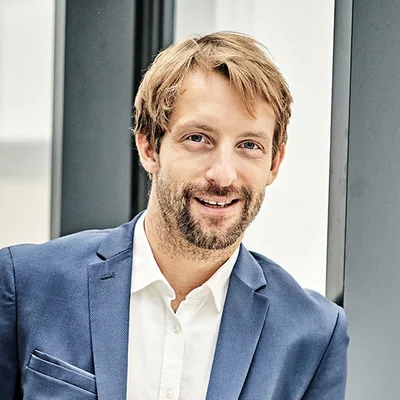
Expert Manager of Pressing Process & Automatization | ŠKODA AUTO a.s.
I am strongly interested in the innovation of automotive industry. Searching, developing and implementing new innovative technologies to press shop department. More than a year of work experience in various cultural environments (China, Spain). Responsible for the start of production of automotive…
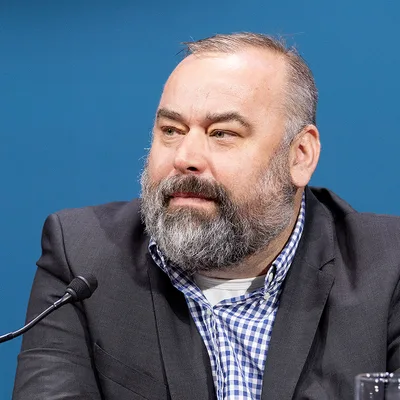
Business lead BLK ARC, LEICA Geosystems, part of Hexagon
With more than two decades in the surveying industry, I have gained a deep understanding of global business development, partnerships, sales enablement, and marketing strategies. I am passionate about educating the community on the benefits and value of mobile scanning technology.