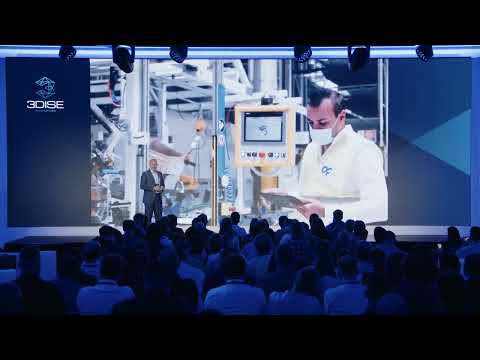

Michal Ukropec, CEO of twinzo, walks through what people call a digital twin, from databases and BIM to configurators, Gaussian splats and factory simulations, and argues that the label matters less than the value. Michal then shows twinzo's live 3D twins that track people, vehicles, machines and building conditions in plants and offices, proposes combining reality capture scans with live data, and answers questions on cybersecurity, tracking technology and the main market.
“because the digital twin should be actually the exact replica. And my problem is with the word exact because you know I'm an accountant by education”
“Because you do the scanning of any type. We are doing the live data. So the thing is, shouldn't we glue these two things together?”
“We are not in planning, we are not in simulation, we are in the operation.”
According to Michal Ukropec, twinzo uses about ten tracking technologies; the easiest and cheapest is tracking smartphones with Bluetooth beacons, while badges need active infrastructure that measures distances.
Michal Ukropec said twinzo can run on the customer's own infrastructure, so the customer keeps the data and is responsible for securing it.
It depends on the region, according to Michal Ukropec: the Middle East focuses on planning new cities, while twinzo's typical customer is a brownfield plant that needs optimizing at low cost.
Transcribed automatically (ElevenLabs Scribe) and lightly edited. It may contain small errors. Click a time to play the video from there.
Host: So we're going to get to the second presentation of today. And I have a quick polling question over here for you, because today we are going to be talking about digital twins. So I have a question for you. This is a poll question. So again, submit your option.
Host: And the question is, if we can get the Slido on the screen, please. How familiar are you with digital twins? You use them, you heard of them, you explore them, or no idea what are those? So let's take a, let's take a look at how familiar, how experienced you are with digital twins. So forty-five percent of you are using them, one quarter of you exploring them, and another quarter just heard of them.
Host: But based on this results, three quarters of the audience are already familiar with the digital twins, which is not bad at all. Thank you so much for interacting. Once again, please keep on sending the questions for our speakers, ideally questions that are specific for the given presentation. And having said that, let's just dive right in in the world of digital twins. And our next speaker is the CEO of twinzo, Michal Ukropec.
Host: Give it up for Michal.
Michal Ukropec: Ciao, ciao.
Host: Michal.
Michal Ukropec: Ted, thank you. Really, how could I compete with this module? It's just mind-blowing. But I have two guys, Tomas and the, uh, uh, how, how was it? The miam miam one?
Michal Ukropec: The crunchy one? The handsome guy?
Host: The crunchy one.
Michal Ukropec: Yes, the crunchy one. Please, uh, hopefully it doesn't break your GDPR rights too much, but we need to make a selfie with you. Maybe? Okay. Uh, let us seeee.
Michal Ukropec: Okay, we have it. Thank you.
Host: Good luck.
Michal Ukropec: Really important because, you know, we are from a tiny shitty country and, uh, it's true. Uh, look at the government. And, um, to be here on the stage in front of all of you coming from all around the world is just something. When I, when I-- because, you know, I'm an accountant by education, okay? I programmed for more than twenty years.
Michal Ukropec: I have two IT companies, so I know the stuff. But when I see all these things, even though we are in the digital twins, I'm like, "Okay, I have to learn more." So, uh, could I have the presentation? Okay. So what it could be, and okay, uh, half of you is using them.
Michal Ukropec: Okay, then let us see what type of digital twin are you really using because, you know, I wasn't very good at school even though I had-- I'm a master's degree, but I didn't care about that. It was too boring, and I don't like the academic bullshit. So if you are from the academic field, please allow me to be a little bit more honest than usually the soil allows you to be. So what it could be? Well, it depends whom do you ask because if you ask Microsoft, for Microsoft it's data.
Michal Ukropec: But for the older generation, is the DBF file from ninety-seven a digital twin? Nah. Or SQL? Nah. I am not that sure.
Michal Ukropec: Maybe the BIM. Please hands up who is working with BIM daily. Okay, let's say fifteen, twenty percent. Okay, maybe. Is this a digital twin?
Michal Ukropec: Uh, might be. But if you compare then the reality with the BIM, does it match? Uh, not very often because the digital twin should be actually the exact replica. And my problem is with the word exact because you know I'm an accountant by education, okay? Maybe during the sales process, this could be a digital twin.
Michal Ukropec: Another Slovak stuff, we really have to be a 3D country. So if you want to buy property, in this case it is in Bratisl- this is in Bratislava, but these guys have plenty of projects worldwide. So you can configure, you can buy the stuff. Okay, I want this basin or not. No, no, no, I don't like it b-brown.
Michal Ukropec: I want it light. Okay, super cool. Is this a digital twin? Uh, the building is not standing yet, so what are we talking about exact replica? Okay.
Michal Ukropec: Then might be Gaussian splatting, but in this case, in construction business, so not in the maintenance or this kind of stuff. This is a construction site, a smaller one, but still. Is this a digital twin? Well, the pictures are valid in that moment, but because construction is quite offen- intensive, um, activity, the next week the site looks differently. So is it a digital twin?
Michal Ukropec: Meh, in some way. Or for romantic souls, hopefully here is no man from Siemens. Uh, this super cool from ni- from the sixties, uh, s- plant simulation, this was for long years considered as a digital twin. Okay? So you are planning a process of manufacturing of whatever.
Michal Ukropec: Is this a digital twin? Well, uh, ten, fifteen years ago, maybe because the guys from NVIDIA have this. Okay So these are not re-recordings from the plant, this is a simulation, but simulation level twenty-four, twenty-five. Okay? If you look in the, at the end, the, uh, the engine or the, at the end of the presentation, okay, this is quite empty, but still nice.
Michal Ukropec: But this can be done maybe with a drone, but not, not this picture can be made, uh, in real life. So is this a digital twin? Uh, yes, but there is no live data. Uh, maybe this could be a digital twin. Uh, sorry that I don't have the lake, uh, uh, slide here.
Michal Ukropec: Uh, actually, I didn't think about it. Uh, this is an old slide, so sorry. Uh, there is, there was no intention with that. Is this a digital twin? Again, if you have no layouts, uh, nothing, and you need to digitize the property, of course, let this be a digital twin.
Michal Ukropec: Okay? So I, I, I, I don't like this, "This is digital twin. This is digital thread. This is digital shadow," and all this bullshit. Please.
Michal Ukropec: We all need to pay mortgages. Maybe this was a digital twin for ... Who recognizes the movie? Uh, not that shy, please. Prometheus, exactly.
Michal Ukropec: This was twenty thirteen, okay? So twelve years ago. And when I saw it, okay, magic, magic. Tell me more. And this is the cool stuff, because here you can see in the, in the hologram how, how things are moving and how the, how the 3D model is appearing, and there are the moving people, and that's something what gets us closer to what we do and what I want to sell you.
Michal Ukropec: Yeah? So is this a digital twin? Yes, in twenty fourteen, yes, and because today you can buy such a thing. Again, no intention. They don't pay me anything for this part of the presentation.
Michal Ukropec: Okay? So you can buy it. So please. Is all of this a digital twin? Yes.
Michal Ukropec: I don't care. So with me on LinkedIn, you know all the time I don't argue, "This is it. This is not. This is psh." For me, this all is aca-academic bullshit.
Michal Ukropec: But now what do we do? Because we are saying that we are digital twin for everyone. We didn't start, however, as a digital twin. This is a British Petroleum building in Budapest, a pro- a project from nineteen, uh, from twenty nineteen. And what you can see here is a 3D model.
Michal Ukropec: Okay. All nice. And what our specialty is that three, two, one. These are the people live now in the office. All these orange dots, four guys behind the bar.
Michal Ukropec: Is bar important? Then they, they have plenty of, uh, of meeting rooms. Please show me the condition of this one, temperature, CO2 level, humidity. They have focus rooms. Please show me how this one looks like.
Michal Ukropec: Again, excellent, optimal, fine. And this app runs on such, uh, totems as you can see here. So if I see Glasl Ofekete, typical Hungarian name, I can find him. And here you can see the temperatures, humidities, and CO2 levels of every single room in that building. This is twenty nineteen, so old scrap.
Michal Ukropec: And when, once we delivered this to Bratislava, London, Dubai, Budapest, and other projects, we said, "You know what? We need to build something more robust, something what is multi-tenant, multi-site, multi-floor, multi-whatever, so we can deploy this level of 3D live digital twin to the world." And that's how twinzo started. So if you don't have the app, now the, my sales pitch begins. Uh, download the app and check the demo zone because there are, like, seventy use cases.
Michal Ukropec: And what we, but what we usually do is this is a Benteler plant in Rumburk, so here, like, one hour from Prague. Please show me what this guy did all day. This is our typical case. So we are not that much into 3D stuff. We are mainly in logistics and, uh, plant operations.
Michal Ukropec: So I want to see what he is doing, and you see the time is running, seven minute, eight, nine, ten. He begins to work, if I remember correctly, after twenty minutes. And then you can begin to ask, "What did you do those twenty minutes?" In plant, it's twenty minutes waste. It costs a lot of money.
Michal Ukropec: And here you can play his all day like a movie, and you can begin to ask him, "Okay, this tractor works in both buildings. Uh-huh, but you were driving here and there. What did you do there?" And then this is a multi-tenant, multi-site technology. So I want to see another plant.
Michal Ukropec: This one is in Poprad. Now it's Beko, it's ex-Whirlpool. But besides the logistics, we want to see also the production. So I click on the production line, and I see, okay, hundred percent performance, even though there is the launch now. It was at ten thirty-four.
Michal Ukropec: Okay, ninety-nine percent. They are, like, three pieces behind the plan. All good. Because if you think that the manufacturing plants know what is going on there, they don't know. Okay?
Michal Ukropec: The plants are too big, too many legacy systems. It's complicated. Uh, here is Lukas smiling from Skoda. He will tell us more today, hopefully This is another Whirlpool plant, uh, but in this case in, uh, Radomsko in Poland. Quite big, fifty thousand square meters plus big.
Michal Ukropec: But this is Škoda, that's Lukasz project. Thank you, Lukasz. And here it is more about facility management, but not in the 3D meaning, but it, uh, tell me the consumption of water, electricity, compressed air heating, cooling, and this kind of stuff. And I want to see the floors, and I want to see the, the performance of the machines, and I want to see the waste, and I want to see the temperatures. And if you have ENIAC on that production line, uh, the, the body of the car is produced, and we want to see where are the bins, because you won't believe how many bins they have to empty daily.
Michal Ukropec: Like thousands, okay? So don't-- it's not an easy business. And then the site is divided to different zones, so you can say who spend how much time in which zone. And, uh, and then of course, there is the heating because you won't believe it, but the heating system has zero visual of which pipe is where and which exhaust is which one. No one knows.
Michal Ukropec: Zero information about that. And then you go to the roof. And then you want to know, okay, where are the risky places? So then the other guys, the drone guys come and make the drone scan, the thermal one. And they want to say, "Okay, these are the risky places.
Michal Ukropec: Here we fix the roof. Here we found the water on the ground," and things like that. So it's more about facility management, not that much about logistic, but this is a typical case. Or if you have diamonds, maybe in this, uh, port in, um, in Antwerp, there were some of them. Because also this is a case, okay, we want to see what is where in these, um, containers because we don't know where we have the things.
Michal Ukropec: Or another case in Amsterdam, they have bridges, they have the GPS positions on all the ships and, and the, the chambers, and we want to know, okay, is there a ship or is there not? Is the bridge open or closed? Or who are the tenants in the neighborhood? And there are of course noise sensors because you want to know if something is messing around in the night or not, because the people are complaining all the time. So we, what we do is that, uh, we are trying to bring the visibility to another level.
Michal Ukropec: And when I said Leica, this is a Leica scan, please, okay? No NavVis, no, no, no, Leica. So also let's digitize or utilize the, the scans one more time. So let's make these 3D models more or less live, so we can combine or we can put areas and points of interest to the 3D models you might have, and, uh, the customers can see how the plant in our, mainly in our cases, are operating. Or if you have the machines, please show me the PLCs, how they perform, what they do, what they don't do, and things like that.
Michal Ukropec: So this is what we do at, uh, at twinzo, but there is, there is more. Where are you? Okay? Uh, thank you for the, for the question at the very beginning, photogrammetry, LiDAR scanning students, CEOs. So what we have or why are we actually here?
Michal Ukropec: Because you do the scanning of any type. We are doing the live data. So the thing is, shouldn't we glue these two things together? Because Matthew is now in June having the conference in the US about digital twins, and he says that digital twins have to be filled with live data. So why not to join forces and to do this?
Michal Ukropec: Here are small examples how it could look like. Okay, now, here we have some examples. So we are not in the 3D world that much as you are, what could be surprising for you, but it is so. But we are playing. So can we get po- a point cloud to twinzo because it's Unity based?
Michal Ukropec: For many of you might be, uh, obvious, but maybe we can, we can convert and mesh the point clouds to something what we could use. All these things you then you can see, um, uh, in the, in, in the export. And we have some automation, maybe not that cool as your ones, but this is exactly the thing where we can cooperate. The other thing is, if it's a little bit bigger, this is also a point cloud already simplified, optimized, but it can be processed and used in a mobile application, so without server-side streaming, because in the manufacturing plants, you might be surprised, but there is not always the best internet connection. It's not the city in the, in the center.
Michal Ukropec: Or maybe in this case, it's from visual components and import of, of a simulation of a warehouse. Also, this can be utilized because as we are specialized in tracking, I want to know where all these boxes are, because you might be surprised there is always a mess. Or if you are in the BIM world, maybe you know the, all these blinking, um, sites, but also this can be fixed automatically. And the BIM mo- model doesn't need to be one terabyte big or something, but it can be even nice, smooth, and shiny for your customers. So this is something where, where we see that the direction of the digital twins could go, even though not that large scale as, uh, as Ted was showing at the beginning.
Michal Ukropec: This was, this is really just, just amazing. And where is the AI? Not just in the 3D model processing. There are also other things. When you combine all the data from, from various information systems, it's hard to get the data or have the data to be useful, okay?
Michal Ukropec: Because data is just data. There is no real information. But the magic is happening, and what you, what you can see here is the first version of how to convert the data to something what we can talk to. Please tell me this. Please tell me that.
Michal Ukropec: But we are not talking about the, the analysis of existing documents, but the position of the data, the production, the whatever. Please show me which, which, which driver drives in these areas and where is the traffic jam all the time. And this is something what you can get some from reports, but it needs a lot of cr- clicking. With AI, this can be converted to a s- readable text, and then you can think about it. So digital twins can be, can be various things and, um, I'm looking forward for the questions.
Michal Ukropec: Thank you.
Host: Michal, thank you so much. Plenty of questions coming from the audience. Once again, great job. Let's bring them up over here on the screen so we can see them. And, uh, Michal, I'll ask you the first one.
Host: So what are the cy-cybersecurity risks associated with digital twins, especially in critical infrastructure?
Michal Ukropec: It's quite easy. We are always saying to the customers, "It's your business, so it can run on your infrastructure. We don't want to have anything with your data. It is your responsibility. We are providing the sec- the, the, the technology.
Michal Ukropec: You close it on the three locks, and it's your business. Ciao."
Host: Got it. So you showed us a couple of examples. How are the workers tracked live or are the workers tracked live in your models that you showed us?
Michal Ukropec: Um, we have like 10 technologies for, for whatever tracking, because it's not just about people, it's about material, about the fleet. Uh, it can-- it might be also a process, so it's quite complex. And, uh, the easiest way is to track smartphones connected to Bluetooth devices or small Bluetooth beacons. This works pretty well, and it's quite cheap.
Host: Mm-hmm.
Michal Ukropec: But there are also situations when the, when the, for example, visitors or workers have to have a, a badge. So then, then you have to have, uh, active infrastructure which measures the distances and calculates the position of the guy or material or whatever.
Host: Mm-hmm. Got it. Michal, again, you showed us a few examples of how digital twins could be used. Um, Michael is asking, what is the main market for digital twins still?
Michal Ukropec: It depends on the region. In Middle East, it's actually not our case because there is everything under huge construction, so they are solving exactly these things, planning, simulation, traffic, how the city should look like and all these things, envir-environmental impact. Our typical customer is actually brownfield.
Host: Mm-hmm.
Michal Ukropec: Because they can't s- change the site, but they need to optimize the site with, with as low cost as possible, and that's where we help. So if someone comes and says, "Michal, we are now building this super huge, super new something, whatever," good for you, but it's actually not the case for us because there are millions of plants, old ones, where we can help. We are not in planning, we are not in simulation, we are in the operation. So there's a difference.
Host: Perfect. And we are exactly right on time. So let's give it up for Michal one more time and the digital twins. Great job.
Michal Ukropec: Thank you so much.
Host: Thanks so much for sharing.

CEO at twinzo | Digital Twins
CEO, serial entrepreneur, and passionate about the newest technology Last couple of years working on the “twinzo – digital twin,” bringing digital twins to everyone. To manufacturing plants, ports, offices, everywhere…