

Matthew Byrd, founder and CEO of RCN, opens with a video montage of speakers, panels and podcast guests from the Reality Capture Network community, then explains why sharing knowledge and connecting people matters as much as the technology. The talk covers aligning passion with work, community over competition, the one percent rule, RCN's volunteer initiatives and why bold moves create opportunities, including the collaboration that brought this conference to Europe.
“If we don't share our passion for the industry with others, we'll never inspire them to consider working in it.”
“So my competitors were my clients in building a business.”
“Innovation is not buying the latest piece of technology. We should think about innovation as just a way of working, a way of living.”
Matthew Byrd said RCN is focused on people and everything it does boils down to three words: inspire, inform and empower.
According to Matthew, you just don't worry about competitors; sharing advice and seeing yourself as a leader broke down barriers, and Matthew's former competitors reached out for help and became clients.
Matthew said the defining moment was learning about reality capture technologies as a survey CAD technician, which led within a few years to a six-figure corporate role, a business that was later sold and now a global community.
Transcribed automatically (ElevenLabs Scribe) and lightly edited. It may contain small errors. Click a time to play the video from there.
Matthew Byrd: Thank you, sir. All right. Good afternoon. Ah. So I might be the-- I don't know if I'll be the most boring presentation or talk for you, or hopefully something still valuable to take away, but I wanted to do something different.
Matthew Byrd: We have a lot of amazing technical content, and I wanna go back to some of the conversation we've had, uh, about community, about inspiration, about really empowering people to make a difference and make change. So before I even talk about it, I actually, uh, completely deleted my presentation last night and started over at midnight and built it till three AM. And I'm gonna show you first a video. Instead of me just telling you about why we should create content or document presentations, I wanna show a video. It's a few minutes long, so bear with me.
Matthew Byrd: But it's really just some snapshots of different speakers, different panels we've had, podcast conversations, because then I'll talk to you about why I think it's important. And my goal isn't for me to just inspire people. My goal is everything I do with our podcast, with our events, is creating an opportunity to highlight you guys, the actual professionals in the industry that are doing these cool projects and trying to create this idea of making that information live on and inspire people further than just one stage that they stand on. So I hope you enjoy this video, and then I'll jump back up. This is open conversation, so we can really dig in with people in the community.
Video: My tagline is inspire one person at a time. It starts with one person.
Video: When you inspire someone, you change their attitude.
Video: We could have the most cutting-edge tool, but if someone doesn't see how it improves their day-to-day, it doesn't go as far for us.
Video: See, we're being inundated with progress tracking, AI, object recognition, you know, all this futuristic stuff, but it's here. It's now.
Video: Somebody within the business who will not only own it, but they believe in it too.
Video: Who's the client that's using, using this? It's all the people in the field that are actually empowered by this technology.
Video: Creating that space that people know I'm not gonna get in trouble if something didn't go right.
Video: Finally now have enough power in the palm of our hand to bring that to the real world, and thinking about how you can connect and leverage that digital world with the physical to increase speed to market, to make people safer. There's just so much opportunity there.
Matthew Byrd: The ecosystems, I didn't really have to pose the questions because we naturally hit a little bit of everything.
Video: I think the smart thing to do is to ask a lot of questions as to who's gonna be using this and what for.
Matthew Byrd: When most new technology comes out, there's a hype curve.
Video: How do you catch up and educate all the users of what that data was intended for, what they can and cannot use it for?
Video: We do have quite a few different scanning and survey technologies and drone programs. We know that we need partners to be able to help us with the big burden of implementation.
Video: But what happens now if you can start to anticipate needs? You can quickly start to communicate and story tell better.
Matthew Byrd: The industry's growing. The scanning needs are growing. Modeling is growing. So everybody wants to know what team should we be investing in building.
Video: At the end of the day, optimizing specs, building off the right specs is only gonna get better data for all of us, which is gonna be more truth. It means more time for us to trust. More trust from us means more time to actually go spend out there and, and do more, capture more.
Video: The biggest thing is the public needs to understand PII, information about themselves. We have a responsibility ethically to start educating people so-
Video: We gotta be willing to stay involved, both the purveyor of and protector from the same technology in a lot of ways.
Video: It starts to not make business sense to maintain all of that human oversight.
Matthew Byrd: Tell us where we're gonna be in twenty years.
Video: When you look at the construction industry, sixty percent of the construction industry is for renovations. And in twenty years will be the same.
Video: You type a prompt, and it spits out the games.
Video: But in twenty years, it will definitely be doing that, and we'll have a high ratio of robots to humans on job sites.
Video: Where we are right now in this chair at this time, all the way down to how we're gonna be in the lab, to be able to track all that over time and then leverage that data with AI. It's sexy.
Video: We have to keep people interested in going into construction, going into design. We have to improve the processes and-
Host: If we wanna inspire the next generation and grow the industry, VDC, reality capture, construction tech.
Video: Land surveying specifically, we need boots on the ground, we need professional licenses, and then we need educators.
Video: We need this younger generation to understand, hey, this is important work. If it's only generational talent, it's not gonna grow. It's not gonna innovate.
Host: There's so many people that would love land surveying if they knew it existed.
Video: As those professionals that you're talking about, how do we reach them?
Video: You have four seconds. If they're not impressed, they're turning and they're walking away.
Video: Getting passionate about something and whether you wanna do something about it.
Video: Be able to combine that. That's what is gonna make somebody great at whatever they do.
Host: Gotta not only say what we're passionate about, but also walk it. Be our own best friends and our own advocates.
Video: It's our responsibility to go and talk about it.
Video: Speaking from your own perspective.
Video: Is going to change someone's life.
Video: The younger generation, which we're trying to attract.
Video: Well, if that's not gonna impress you, then maybe this will.
Video: I heard the word three D and laser, and I was like-
Video: Has that wow factor to it.
Matthew Byrd: We can't actually not hit the mark because we have so many people involved.
Video: I failed a lot, and I'm hoping that I can help other people not go through some of those failures.
Video: This is a, a fantastic opportunity for all of us to come together, lift that tide. This gives them a head start.
Matthew Byrd: The collaboration with the community is gonna help us solve these problems.
Video: All right. This next generation, this, this community needs to learn from that and move forward and say, "Okay. Let's not be in a bubble."
Video: Okay, this is something I want to be a part of
Video: Technology come up, it's not for the sake of technology. It's really serving a purpose
Matthew Byrd: Because as you said, the industry is growing, and it's growing fast.
Video: How do we as an industry help each other in educating our own staffs, elevating the product of all of us really?
Matthew Byrd: This group as a voice can start to talk about, "This is how we would like things to be." Like, we want people that are in this community that are actually interested in making change to get involved.
Video: Nevel and NeRFs are totally going to change how we use 3D. We have used there around thirty thousand images, few thousand of laser scans to get very high quality and high detailed model. NeRFs are usually with the high quality, and it relies on AI. Everything was generated only from one or two orbital flights around the building, and we managed to get the entire environment. Gaussian splatting on the other way is quite faster.
Video: Quality might not be as good as in NeRFs. If you learn it, if you play with it, you will also understand how you can get the right results. So you create something simple, and then you get variations, visuals, and it's easier for you to work further with it
Video: Kept doing the same thing I was doing there, looking for a great story that I know reality capture can make even better.
Video: This week on the Matthew Byrd Podcast
Matthew Byrd: Everybody has an angle that they have strengths or weaknesses, and you're doing things that nobody else is doing.
Video: The owner of VCTO Labs, providing technology to storytellers.
Video: Pete Kelsey.
Video: Pete Kelsey.
Video: Pete Kelsey was called in to 3D map the infamous island.
Video: I have been absolutely hooked on reality capture. To me, it's the ultimate art
Matthew Byrd: You have to know you're pulling back in order to launch ahead.
Video: Humility has served me incredibly well.
Matthew Byrd: You're providing the opportunity for others to join you on that journey.
Video: I turn around and I look at four thousand people. Two-thirds of them were in tears. As close as I've got in my life to an epiphany
Video: Everybody has a story.
Video: Everybody has a story.
Matthew Byrd: How are you different than others?
Video: The only difference between you and I is me.
Matthew Byrd: RCN is focused on people. Without people, there is no community. Everything we do boils down to these three words: inspire, inform, and empower. If we don't share our passion for the industry with others, we'll never inspire them to consider working in it. Whatever you're thinking the future might be in five, ten, fifteen years, it only gets there if action takers take the steps, and you could be one of those people.
Matthew Byrd: You can do anything that you can imagine. Thank you. Thank you for cheering and clapping for you guys. I think you probably saw some familiar faces, right? Um, and this is what I love about community and building these relationships with people is not only do we meet one time at a conference, but then we follow up on LinkedIn, right?
Matthew Byrd: And then we follow up and have a podcast. And then we invite them to the next event, and we build this ongoing relationship where we can continue to inspire each other, find like-minded people to connect with, and hopefully inspire new people to join us on this journey. So I'm just gonna talk a little bit. I'm gonna ramble on. You're welcome to submit some thoughts, questions, ideas.
Matthew Byrd: Um, I just wanted to hit on a few really things that are personal to you because as the end of that video said, to me, truly, my mission is about people. It is about the people in the industry. The technology is nothing without the inspiration, without the motivation, without the right connections of people that actually wanna even make the, you know, take the risk of trying something new, right? So the first thing for me is talking about truly believing in whatever it is that you're working on and getting passionate about that work. There-- And many of you in this room, you're here because you are one of those people, right?
Matthew Byrd: But are you doing anything to inspire someone else to get into this industry? Are you sharing the cool projects that you're working on? Are you talking to students? Are you talking to family members that are trying to consider career paths? Step one for us to change this industry is to inspire other people to join it.
Matthew Byrd: And I think when you align your passion with your work, you do much better work, right? My, my journey in this industry started in land surveying. Didn't love land surveying, honestly. Sorry. I was a young surveyor out in the field in the heat.
Matthew Byrd: But once I got into the technology, that blew my mind, and I became super passionate. I became the guy who worked all the time. I was watching videos, trialing on my own, having fun with the work. So become passionate about your work. Steve Jobs says, "The only g-- way to do great work is to love what you do."
Matthew Byrd: You choose your future as well, right? The future doesn't create itself. Um, I love this quote that is attributed to a couple different people, but it says, "The best way to predict the future is to create it," right? If we talk about these amazing ideas of what the future of a job site could look like or how we use these technologies, and then we sit back in our chair and we don't actually take the steps to do so, it'll never happen. This doesn't happen by itself.
Matthew Byrd: So taking the steps forward when you have an idea, you have a dream, um, is another step. Community and collaboration. Again, we talked about this on the panel, but just wanted to touch on it again. What is true community? It's really wanting to see the success of other people.
Matthew Byrd: It's empowering them with the knowledge that you've built, that you've gained. And, and, you know, people ask the questions of like, "Well, how do I, how do I not worry about competitors?" You just don't. You just don't worry about it, right? It-- There is so much opportunity out there.
Matthew Byrd: There's way more benefit from you seeing yourself as a leader As a thought leader, doesn't matter what your job title is, doesn't matter what company you work for, connect with people, share, give advice in areas that you have expertise, and you'll find that people respond to you in a positive way as well. I've seen many people that had a very competitive mindset, and because of the attitude I had toward them, it kind of broke that barrier and wall, and instead of seeing me as a competitor in my past as a service provider, they reached out and said, "Hey, we are busy and we actually need help." So my competitors were my clients in building a business. Removing fear of failure, embarrassment. Removing f- uh, you know, that, that concern that people have when they're, they're considering something new.
Matthew Byrd: They're considering and trying something new, launching a business, launching a department, the risk in investing in technology. We can't be afraid to try something if we want to be leaders in an industry. I am gonna go through some of these quickly because I wanna be on time for the more important speakers that are coming up. O-one percent rule. This is something we talk about in our company all the time, right?
Matthew Byrd: It doesn't matter how great we are at what we do today, we should always ask, "How can we be one percent better tomorrow?" Whether it's a project, whether it's how we apply a scanner, whether it's how we use a drone. And I say we as a community, not me. But we do it in ours. How can we improve that video tomorrow?
Matthew Byrd: How can we improve the next video? How can we improve how we're engaging the community to inspire more people to join this industry? So think about that for you and yourself. And, and a lot of why I share this, it's not even just for how do we help the corporate companies do better, I'm talking to you as an individual, right? Right?
Matthew Byrd: Everybody also is looking out for themselves, right? Y-you all have jobs. This is your career. How do you get better? I-if you take the time to research on your own the technologies, even if you're in a company that doesn't support it yet, do it on your own.
Matthew Byrd: The industry is going this way. There's a lack of people who have the expertise to perform these services. Learn on your own, you're going to watch your career grow regardless of the company you work for. There's really no doubt against the fact that there's massive opportunity growing across so many industries. From all the technologies that fall under these buzzwords, right?
Matthew Byrd: Reality capture, digital twin, it's lidar, photogrammetry, drones, XR headsets. They are disrupting trillion-dollar industries in construction, in nuclear, in warehousing, and just so many opportunities. But it's also the Wild West of the industry where it's a, it's a difficult, complex technical ecosystem that needs creative people to get in and solve these problems. Uh, this quote I love as well because it goes back to Thomas Edison, and I feel like it's exactly where we are. There is way more opportunity than there is ability to actually perform what needs to be done.
Matthew Byrd: And I think that we're seeing a growth curve in the demand for a lot of these technologies, and we talked about it earlier in the event too, that there's a lack of universities, proper education. Like, it-- the, the people that are learning how to do this right now are all hands-on. They're all failing forward on their own. So the best way for us to grow the technical capabilities of the industry as a whole is for us to just jump in and do it. And that's why we've started a lot of what we do.
Matthew Byrd: Innovation is not buying the latest piece of technology. We should think about innovation as just a way of working, a way of living. It is constant improvement. And I'm not gonna go through all these for time's sake, um, but you can come back to this. A couple initiatives that we have at RCN, how are we trying to make a bigger impact for the community, for the industry?
Matthew Byrd: Um, we started a committees organization. On a biweekly basis, we have professionals from all arou-around the world joining a meeting on our Discord and on a Google meeting. We have hundreds of people signed up that are-- They're not paid, they're not employees, they are volunteers who say, "We wanna make a difference in the industry. We know we need tra-training. We need education.
Matthew Byrd: We need standards. We need guidelines. We wanna know about the latest tech." They are meeting and working together on problem statements. It's a way that you guys could actually get involved.
Matthew Byrd: Another way is, uh, you know, that we've-- we're trying to support the community is saying there's a lot of smart people out there, and a lot of them are focused on, "How can I make the latest iPhone app for gaming? How can I get a job at some social media company?" What can we do to inspire some of the talent that's out there to consider coming and making a difference in the built world, which I say is one of the most important industries around, right? We build the world. We build airports.
Matthew Byrd: We work in nuclear. We, we have very important role in the world. So we have a startup pitch competition where we're raising funds and we're donating it to startups who come and pitch, and, uh, that's another thing we're trying to build. Sharing your story, whether it's on my podcast or you start your own podcast. Uh, it's another one I've been asked like, "Oh, uh, I'm starting a podcast.
Matthew Byrd: I don't wanna-- I don't know if you think that's okay, or, you know, I don't, I don't want you to seem like a competitor." I'm like, "No, please." Like, just message me. I'll give you all of my tips. I'll give you anything I can.
Matthew Byrd: You know, my goal is to help this industry grow in whole, not about my benefit. So share your stories. Make bold moves. These guys came out... Uh, yeah, nice hand raise there.
Matthew Byrd: Uh, actually, yeah, give it up for, uh, the bold moves that were made to put this conference on. This conference, I don't... You can correct me if I'm wrong, but, uh, I don't think would have happened if these guys didn't take their risk of coming out- And coming to our event. They came out a couple years, and, uh, that's a big risk. I see how much time, and effort, and cost it takes to fly to Europe.
Matthew Byrd: This is my first time in a conference in Europe, so I appreciate the w- the welcome. Um, I, I wouldn't have gotten to put on an event or be involved in an event in Europe if it weren't for them coming out and saying, "We love what you're doing. We really want to do one in Europe. Like, can we collaborate?" I, I know they could have done it great without me, but that was the driver for me saying, "I would love to support.
Matthew Byrd: If it's a way that I can support you in this mission of growing globally, let's do it." So you never know what's gonna come out of a conversation, right? They took the time to fly out, to speak, to meet, to ask, removing the fear of, of, uh, you know, rejection, removing the fear of failure, and it turned into this. Where does this go from here? Who knows?
Matthew Byrd: Keep making bold moves. Start today, change the future. The choice is yours. Thank you.
Host: Let's give it up for Matthew. Well done. Well done.
Matthew Byrd: Thank you.
Host: Quick question-
Matthew Byrd: Okay
Host: for you. Can you tell us about the defining moment that helped you grow or shift direction in your career?
Matthew Byrd: The defining moment was literally learning about these technologies. I am a very open and honest person, you can ask me any question any time. I was making $13 an hour as a survey CAD guy. I found out about this technology, and that took me from, like, hating work, not wanting to show up, to super excited and passionate, looking into the tech, playing with it on my own. In a matter of a couple years, I went from making $13 an hour to a six-figure salary at a corporate company, to quitting and building my own business, scaling, selling it u- last year, and now on to second business and growing a global community.
Matthew Byrd: So becoming passionate about what you're working on might sound cliché, but it's what changed my entire career, and that's why I wanna pass that on to other people.
Host: Thank you so much. Ladies and gentlemen, let's give it up once again for Matthew.
Matthew Byrd: Thank you. Thank you.
Host: Well done.
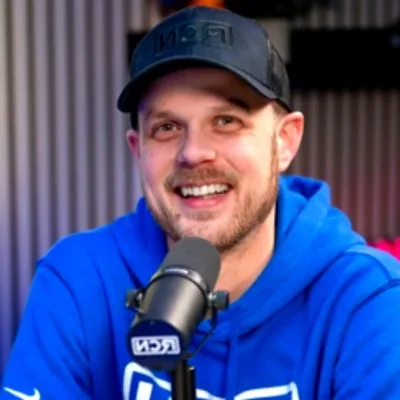

Founder, Reality Capture Network (RCN) | Podcast & Conference Host
Building Reality Capture Network from a podcast into a global ecosystem, he connects innovators through media, events, and community. He helps leaders in XR, AI, and digital twins gain clarity, build authority, and create real-world impact across the built environment.


