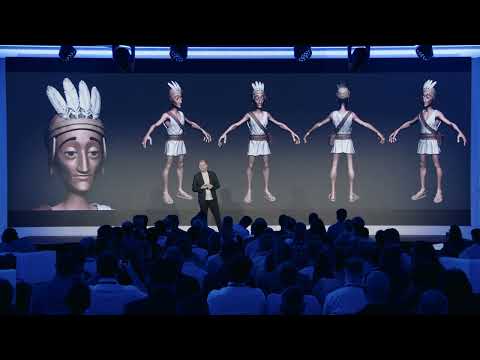

Moderated by Michal Gula, heritage documentation teams from ICONEM, CyArk and Overhead4D discuss how scans of heritage sites can serve both experts and the public. The panel covers when Gaussian splats are accurate enough, funding and permits, educating clients about the dual use of data, whether heritage data should be open, generative AI and where to publish 3D heritage after Sketchfab.
“People want useful things that they can leverage, get value out of, solve a conservation problem, solve a restoration problem, tell a story, reach an audience.”
“I really like to say like dual use of the data, where we move to a time when, uh, the sites, historians, and researchers, they understand digitization”
“it's clearly a place which needs more people doing the scannings”
According to John Ristevski, CyArk combines government and state grants, foundations and corporate sponsors, and fundraising is tough because funding is limited and competitive.
John Ristevski said permit negotiation is one of the biggest time sinks and can take anywhere from three months to a year, though it gets easier in countries where the team has worked before.
John Ristevski said CyArk makes data open where partners and site authorities agree, generally releasing raw data on Open Heritage, while Jonathan Chemla noted that public funding often requires open data and experts can usually get research access.
Transcribed automatically (ElevenLabs Scribe) and lightly edited. It may contain small errors. Click a time to play the video from there.
Moderator: Thank you so much. Um, let me introduce you, Bachaar Tarabay. Welcome. John Ristevski, you already seen him, but, uh, he's a very interesting guy, so let's, let's have him again. Welcome.
Moderator: Tomas Barnas. And Jonathan Chemla. If I could sit also, that would be great. Yeah. Thank you.
Moderator: You can move slightly, just a bit. Yeah. Welcome, guys. Uh, so, uh, we have been speaking about different kind of, uh, reality capturing during the whole two days. And, um, what I love about this conference, me personally, is that we are all using the same technology but with very different outputs.
Moderator: And one that is very interesting is, um, the cultural heritage. So that's why we decided to have this discussion because, uh, most of us, uh, might be using the laser scanning photogrammetry or 3D Gaussians for, for surveying, for s- s- build, uh, documentation and so on. But especially these guys are trying to preserve the cultural heritage. And maybe f- just for the beginning, if I could give you guys all just, just a few seconds to introduce, like, what, what company you are coming from and what's your specialization with the cultural heritage. We can start with Jonathan.
Jonathan Chemla: Um, thanks for, for the invitation. I, I'm CTO at Iconem. What we do is 3D scanning endangered heritage sites, uh, archeological sites. We started in the Middle East and then expanded to, to Europe, uh, Africa, the Americas, Southeast and China.
Moderator: You might know Tomas, but still.
Tomas Barnas: Uh, yeah, I, uh, like within this panel, I'm representing my company, Overhead4D, and we'll be talking about digitization of cultural heritage. So that, that's the team.
Moderator: John, you have the second chance to introduce yourself.
John Ristevski: Hopefully you remember what I just said. Yeah. I, I'm from CyArk. You just heard it.
Moderator: Sure. Bashar?
Bachaar Tarabay: So I'm from Iconem. I'm the head of scientific projects, so my role is, uh, to help Iconem create this project, create these collaborations and partnerships around the world, and make sure that this project happens from A to Z.
Moderator: Okay. Guys, uh, how I would like to run this panel discussion is, is not a question, answer, question, answer. I really like, uh... I would like these guys to, to discuss with each other. I will try to facilitate the, the, their discussion.
Moderator: I will try to spark some controversy between them because I always like when people are arguing with e- with each other. And you are welcome to, to ask questions, uh, in the Slido. So I'll do my best to ask their, your, your questions to, to them. Uh, if you want to ask a specific person, please just put the note there, uh, who you are addressing the, the question to. Uh, we have been speaking about the 3D Gaussian splatting.
Moderator: Uh, so far, I mean, like until, I don't know, like two years ago, we or you were mostly using photogrammetry and laser scanning. How would you compare the, the, the accuracy for what you need in, in traditional photogrammetry laser scanning compared to 3D Gaussian splatting? Whoever feels like going first.
Jonathan Chemla: Jonathan.
Moderator: I do? Okay. Um, thanks. Nice question- ... uh, for the introduction.
Moderator: The, the w- the way we see, uh, Gaussian splatting, uh, at Iconem is like an additional layer, uh, and for the, the, uh, an a- an additional representation of the, of the physical spaces, uh, we do capture. Uh, for the experts we work with, uh, we really see these converging needs between experts who need, uh, geometrical accuracy, uh, for, for, uh, doing their measurements, uh, for making restorations and stuff like that. And we are-- all these needs are converging with the needs more of, uh, preservation, um, of, uh, the museums, uh, we work with, and it's really different needs, but the same, same outputs can be used, uh, for all these people at the same time. Who would like, like to jump?
Bachaar Tarabay: I can add, uh, some elements. So generally we use photo- uh, photogrammetry and LiDAR or scanning for precision because we work with a lot of archeologists, historians, and architects restorers. And one of the main aim of our project is to help them facilitate their work and observation over the sites. But as we shown yesterday in the Minaret of Jam, in that time, you were obliged to do photogrammetry even for the site, around the site, and the mountains of the-- and the valley. So if we had to do it again, we would redo the scan in photogrammetry and laser for the minaret itself, but you would add the layer of splatting for the environment which would give an even more rich, enriched vision that will help you really get immersed even without using, uh, VR or AR.
Moderator: Maybe-
Tomas Barnas: Like-
Moderator: maybe I would tackle also like the, the accuracy in general. Uh, because- I'm just supposing that, uh, for different use cases, even within the cultural heritage, you need different accuracy. So could you, Tomas, maybe?
Tomas Barnas: Yeah. That's exactly what I wanted to mention, that, um, also as in other, uh, fields or industries, uh, in certain projects you need more accuracy. You need the data which are used for reconstructions, for something, uh, which is used for future building or reconstructing the certain place. That means, like, if we really speak about the cultural heritage which needs a reconstruction or we-- which needs plans, we still need to stick to traditional technologies. But I really liked what, uh, Bachir just mentioned, that, uh, the best use case now, which I also see in many of our projects, is to giving the data the story and the context.
Tomas Barnas: So it's not only about recreating something, but, uh, if we would later maybe speak about, uh, budgets or something, you would never be able to reconstruct the entire environments, and no one would ask you for that, and no one would give you money for that. So actually, like, you can still, and it's still required to make very accurate center of the focus, but the rest is more or less like on us to give the people and, and, and also to clients the, the story around to understand the surrounding.
John Ristevski: Yeah. Like, like for us, I think it's always about trying to understand what the partner or the client needs and trying to rightsize what we do to fit that. And, you know, even before splatting, you know, even if you had LiDAR plus photogrammetry, you know, there was also accuracy considerations there. Do you put in survey control? Do you do a GNSS survey to do geo-referencing?
John Ristevski: That would take even more work. You know, there's like levels of rigor and accuracy in every project, and I think splatting is maybe the least today, the least rigorous and beautiful to look at, but maybe hard to quantify in terms of metric accuracy. So maybe being clear with our partners and our clients about what's actually needed. For us, if we're doing a pure storytelling project for visualization, maybe we don't need to do any of the other work. Maybe we can offer it to them much cheaper or at a much lower price point than we could if we added all these other layers to it.
John Ristevski: Uh, I think-- and it all comes down to, I think, having a really good conversation with your partner, client, and trying to understand what their needs are for a particular project. No one data capture is gonna do everything for you, right? And all the heavy lifting. Like, I think that's, that's a misnomer.
Tomas Barnas: Right. But exactly like the, the thing you were just showing in your presentation. It's something where I can imagine that you have, uh, like good adaptation of Gaussian splats 'cause having them online on the platform's easier than the heavy data and having their stories inside annotations. That's something where can be really nicely used, where you don't actually care much, if we can say it like this, about accuracy.
John Ristevski: Yeah. Yes. Data access-
Tomas Barnas: Like it is accurate. It is-- The size is there, scale is there, but you don't need the centimeters or something.
John Ristevski: Yeah.
Moderator: Well, especially for the nice moon data, I, I would like to have a centimeter accuracy. What were you able to achieve there?
John Ristevski: Oh, very little accuracy, I think. This-
Moderator: Have you placed targets on the moon or?
John Ristevski: No targets. Zero targets. I wish I could go there to do that, but yeah, no, it was all hand-modeled from, um, whatever imagery was there from the missions and, um, that was basically our reference and what the archeologists, the lunar archeologists had.
Moderator: Still many people believe that, uh, we never landed on the moon, so-
John Ristevski: I know
Moderator: it might be AI, guys. The, uh, just a disclaimer. We, we don't know. No, just kidding. Uh, uh, in, in terms of accuracy, especially with the cultural heritage, I like to tackle also the, like the fourth dimension, uh, because we are not only speaking, uh, only about accuracy in, in millimeters, centimeters, but also in time, right?
Moderator: Because what you are trying to do is to preserve the cultural heritage, but you are capturing, capturing it in a time. Uh, how accurate can you or how sure can you be whether what you are capturing today was the same as it was like, I don't know, like 100 or 1,000 years ago? What, what does it mean, the accuracy in, in time, uh, sense for you?
Jonathan Chemla: Um, definitely it's not, uh, the way it was 100 years or 1,000 years ago. The, the, the thing you can do is based on that's kind of how the sites, uh, looks like today. Uh, recreate how it could have looked like, uh, in, in before, uh, different, uh, states, uh, in time. And for these you really need the, the expert's knowledge. Uh, John really, uh, showed that, uh, pretty well.
Jonathan Chemla: It's, it's, uh, an important way to build a project, um, with the clients, with the local communities, with the experts, uh, in the field who helps you, uh, do back and forths and recreate, uh, these different states so that you can better, uh, represent them for, for the general audience to, to illustrate that, that history of the-- that, that common history.
Tomas Barnas: Yeah. And that's also not just about like, um, understanding their point of view or understanding their knowledge, like, I mean a client or experts, but also you need to start the story and the entire project like this. That you discuss with them what they want to achieve, 'cause we had this discussion multiple times. That you cannot just go on site and, uh, and think like, "I'm doing everything with that precision," or something. So we all, I believe, collaborate with historians and people, local people, which are telling you the story of the, of the place even before you are capturing and scanning.
Tomas Barnas: So you many times can find the places which maybe are not accessible or they are not open for public, and they really want to show it or they really want to preserve it. So, like this entire work is really strongly depending on the collaboration with locals.
Moderator: Mm. Uh, we, we have a question from the audience, like how do you get jobs, uh, for cultural heritage?
Bachaar Tarabay: I think that's the most challenging aspect of our work. There's so many cultural heritage around the world, but so little money and funding that is l- allocated to these kinds of project. So especially I think at first when- The, uh, the, the, our, uh, different companies we work for or that we funded, founded, uh, had re- a lot of problem to convince people of the needs. So now it's becoming more and more natural, but even today, getting funds is quite challenging because you need to, uh, e- especially public funds, because you need to tell them why you're doing this and how it's gonna be used later on, and why, if it's already been done, what is the advantage of doing it again and again and so on, because it's the, the opportunities are limitless. It's quite easier in the private sector, but it's not that, uh, it's not that, uh, random, and you don't have, like, millions of private funders who just want to scan cultural heritage because you really need to be, uh, uh, immersed in this importance of this field and how documentation can help construct this common, uh, history for humankind.
John Ristevski: Yeah. I, I totally agree. It's a tough, it's a tough segment to work in. There's not a lot of funding. What, what is there is very competitive.
John Ristevski: For, for us at CyArk, it's a-- our funding is usually a mix of, um, government grants, so, and a lot of it is US focused for us. And, uh, that's become challenging recently with the new administration. Federal grants was, like, a large part of our funding pool, and that is, a lot of it that has dried up in the last, uh, 18 months. But there's also state grants. There's foundations, a few foundations that fund this work, uh, across the world and, and the United States.
John Ristevski: Um, we also have some corporate sponsors. I think Iconem does too. Um, so usually it's a, it's a mix of different funding models to, to keep, uh, uh, entities like this alive. But it is, it is, it is a tough, uh, field for fundraising.
Tomas Barnas: Yeah, and like funds and, and tenders, like Baschar mentioned, that's always complicated because you need to define it and you actually need to educate the, uh, client or the site to know what they want and how to define it. So many times for us, it's not only about, like, offering a product, it's more about educating the site first of all.
John Ristevski: Mm-hmm.
Tomas Barnas: They need to understand what is possible. They need to understand what can fit their needs or what would be nice to have. And when they understand this, then you can move to the project. So part of our businesses is the education and trainings and, like, sharing knowledge with, with the sites. Because if historians or, like, researchers understand that, then, then it's easier also to bring this in the-
John Ristevski: Mm-hmm
Tomas Barnas: let's call it production.
Moderator: So how, how, how do you tackle the situation when typically you, you need to educate your client, your potential client, then they're obligated to, to do some, some competition for, for the job because they cannot just give you the job, and somehow you don't win? What, what, what you do?
Jonathan Chemla: It's part of the game. Like, uh, if, if, yeah, the, the needs have been understood. Usually, the needs are well understood by the, the, the people closer to the, to the sites. It's, it's harder for them to get, uh, the approval from their, uh, management or to get the, the, uh, the funding for these kind of projects. Um, but yeah, if, uh, you see that, uh, there has been, as Baschar mentioned also, heavier and heavier focus, heavier and heavier express of these needs, uh, for 3D documentation, then, uh, there's plenty of room for all of our companies to operate, uh, all around the world.
Jonathan Chemla: Uh, it's clearly a place which needs more people doing the scannings and, and if it's another people, another company, uh, winning the, the job, then you'll try to find another one.
Bachaar Tarabay: And I would like to add that honestly, even when we see other sites that you would have liked to scan being scanned by other companies, honestly, it's, it's a win because you feel like it's being done. It's not about I did it, it's about just being done and accessible to the people. And it's not-- the competition is always there, and it's part of the game, and this is what leads us to get better and better and get even more precise with what we can offer. But as long as the job is being done, honestly, it's part of our objectives that are being completed, whether it's us who conduct it or other companies.
Tomas Barnas: As long as it's done well.
John Ristevski: Yes.
Tomas Barnas: Because this is a really important point.
Moderator: Bullshit.
Tomas Barnas: Uh, the problem, and I would say like, uh, longer time, like the, this kind of segment or field, uh, was struggling, uh, on the beginning when the data were being created. They were not high quality, but they were heavy. And, uh, I think that break, like convince those sites and, and people around cultural heritage that they really can use it-
John Ristevski: Yeah
Tomas Barnas: uh, was, uh, was a big challenge. So it's important that, uh, yeah, not that just few company are, are doing that, but more about like really, um, whoever is doing a cultural heritage, it just needs to be well done that, that these people are not leaving from that field and not saying like digital, uh, stuff is not for them.
John Ristevski: I think your, your point is right on. I think the, the story of CyArk, you know, we started 23 years ago, and so scanning was in, uh, in its infancy. You could go out there, we would scan, we would collect things. You couldn't do much with it. So there was not much-- There was a lot of wow value in showing it to the client or the partner or the site, but actually what value did they get out of it?
John Ristevski: And that was my own criticism of CyArk in the very beginning, is there was very little value. There was an idea that you could archive it and, and CyArk used to call it scan and can. You go scan it and put it away, and maybe you can do something with it someday. But that's just not what people want. People want useful things that they can leverage, get value out of, solve a conservation problem, solve a restoration problem, tell a story, reach an audience.
John Ristevski: Gotta have something there. You can't just do projects for the sake of doing projects.
Moderator: Uh, from my experience, uh, the client rarely knows what they want, like exactly, right? So the part of the education is also ... explaining them what are all the options.
Tomas Barnas: Yeah.
Moderator: Like what for could the data be used for? What are different types of, of, uh, collecting data, uh, processing, uh, using as outputs. So I would guess it's a part of your job al-also to explain to them it's not only about the nice VR solution or AR solution, but, uh, also about the documentation, about the reconstruction, uh, uh, I mean digitally. So, so what are the, like, like different ways of how you communicate with clients and what different ways of, of the outputs and, and usage of the data you are usu-usually communicating with, with clients?
Tomas Barnas: I would call it here, um, I really like to say like dual use of the data, where we move to a time when, uh, the sites, historians, and researchers, they understand digitization, they understand photogrammetry, many of them, uh, and they want it. But we are still in the stage where, um, you are more hearing about the digitization for archives, for saving it, for pro-preventing for the future, uh, but not that much about how to use them. So we are kind of in the middle way with most of the clients, I would say, where, uh, everybody now, we don't need to explain them you, uh, what is photogrammetry or, or that you might need it, but it's now more about explaining it correctly, how you can use the data, that it can be a benefit to bring it back to the audience to get, uh, maybe engaged, uh, other generation of people which really want to play always with the digital stuff, with phones, with anything. So just bringing it back to audience in different way.
Bachaar Tarabay: Yeah, I feel also that it's our responsibility to, to showcase what we can do with it, and I think that one of the m-most asked question when I started work at Iconem is, "And then what? What do we do next with this data?" And honestly, at first I struggled a bit because it was, it wasn't easy to find the smooth, easy answer to digest. But I've, I realized that with time, this question is asked in a more direct way with more specificity, and, uh, that helped us a lot also to guide our work and to see how we can make it even more accessible to peop- to the people, whether by crea- by creating platforms, by creating tutorials, by following up, not just appearing and disappearing. It's a continuous work.
Bachaar Tarabay: Even if a mission is dated for like a week or two, our work is infinite, and we can st- we still have, we have this responsibility to follow up with the people we worked with in order to ensure that they are using the data well. We, we know a lot-- we know perfectly how it works, but we can't expect others to know, to know it, especially that this technology is ever-growing and even us are learning every day. And in these two days, I learned so much more that I imagined I could, and it's quite enriching to see what, uh, how this, how it's evolving and the responsibility we have to ensure this, uh, this, uh, this translation between tech and what, uh, the community needs.
Moderator: Anyone else? Uh, okay. So, so now we have educated client, uh, hopefully won the job. We have a question from, from the audience, like, what's the bottlen- uh, bottleneck of, of the process? Is, is there any permit, any institution that can cause you problems before actually capturing the data?
John Ristevski: Permit.
Moderator: You are all, you are all smiling, so I, I guess there is or there are.
John Ristevski: Permit negotiation is like the big- one of the biggest time sinks. It can take anywhere between three months to a year. Like we, I think all our, our organizations always operate under a full permit. Like we have to. We have to-- We have a reputation that we need to uphold, relationships that we need to cultivate.
John Ristevski: So every-- We can't just go out there and rogue catch something or rogue fly a drone. It can be very-- That would ruin our future work. So I think permitting is like one of the biggest hassles, but it's part of the game. I think you have to work with local communities, local authorities, ministries of culture to be able to do that work. And I think over time it becomes easier, then negotiation becomes a little easier.
John Ristevski: If you worked in a country before, it becomes easier to get that permit again. If you're working in a new country that you've never been to before, it's gonna take a long, long time to get that project off the ground. But I think working in cultural heritage, that's just part of, part of the game, I think.
Bachaar Tarabay: Definitely. And having local actors that can help you out, and that's one of the perks of working with locals. It-- They know the system, maybe not perfectly, but they can guide you to get there. And, uh, I want to add something. If you wanna be specific, what are the most difficult permits are the drone permits.
Bachaar Tarabay: And even when you have them, sometimes you can't fly them.
Moderator: Mm-hmm.
Bachaar Tarabay: So it's quite a hassle, and you have to think on site, "What is the alternative? I'm here, what can I do?" Because sometimes-
Moderator: Mm-hmm
Bachaar Tarabay: we, we fly and we go there thinking that everything is clear, everything is prepared, and, uh, once the drone starts, the problems begin. And sometimes the drone doesn't even start. We had this problem, but we always find solutions, so we have to be agile and versatile in the ways we work because we never know what might, uh, happen. And I usually think my job is, uh, finding solution to problems that might never happen. So it's kind of challenging.
Bachaar Tarabay: It gives you like, uh, some kind of push. And honestly, everything is possible, but the problem is the matter of time. And if I can give one advice is identification of all the actors, because if you miss an actor and he finds out that you are doing it without consulting him, that can create a lot of problems and obstacles in project.
Tomas Barnas: Yeah, I would add there just that, um, there are two ways to look at it, and one is whether the site is interested in that project or someone else that you digitize that site. So totally the two different things.
Moderator: Mm-hmm.
Tomas Barnas: Because if the site wants it, as you mentioned, it's a question or a matter of the time. So it's always possible somehow, but it takes time. But if someone else is, uh, requesting you to scan some site and they don't have a communication, it might happen that you would never get a permission.
John Ristevski: Yeah.
Tomas Barnas: So this is very important that you need to have the site involved if you want to have like a world-known heritage or wonders of the world, then, then it doesn't work without them.
John Ristevski: They, they can, like you said, they can be creative solutions. We had, we had an interesting project a few years ago on the National Mall in Washington, DC, where you absolutely cannot fly a drone. They will not let you fly a drone on the National Mall. And so we talked and we talked with the National Park Service, and eventually they were like, "Well, hey, hey, we can fly you in our helicopter," the National Park Service police helicopter. So they let us go in the helicopter, take aerial photographs of the monuments, but no drone, but we could fly in the police helicopter.
John Ristevski: That was totally okay. There, there are creative solutions.
Tomas Barnas: Helicopter is more green, right?
John Ristevski: More green.
Jonathan Chemla: If anyone is selling any helicopter here, uh, we're interested.
Tomas Barnas: Uh, has anyone of you, uh, ever had a project that you actually got the job, but due to permits you weren't able to finish it or, or to do it at all?
John Ristevski: Yes. Yeah, it's happened before. Yeah.
Tomas Barnas: Please do share.
John Ristevski: Yeah. Uh, I, I remember one project we did in India. We got some initial permits. We were able to do the data capture. For some reason, the, the full permitting process did not finish.
John Ristevski: We never, we never released that data, zero. It is, it's sitting on a shelf because there is an Indian government official that did not want this to happen, and it just stopped. So we do- didn't just get off the ground. We did the data capture. It just never, never saw the light of day.
Tomas Barnas: Basha, you were nodding as well, so-
Bachaar Tarabay: I think politics, it's, uh, cultural heritage is very linked to politics, to the narrative that you wanna create, what is the message you want to convey, and that can create a lot of problems in limiting a project. And for example, on another site, I talked about project when the-- where the drone couldn't fly because it didn't want to, even with all the authorization, the no-fly zone of DJI didn't want to be turned off. And, uh, we had-- we didn't-- we weren't able to do the whole mission like we wanted. We were able to assess the main elements, to scan the main elements. But sadly, even though we had all the authorization, local, uh, and international, we weren't able to do exactly what we needed to do.
Tomas Barnas: Uh, do you, do you agree, uh, again, the question from the audience, do you agree that, uh, 3D recording or, or 3D data from, from the cultural heritage should be public?
Bachaar Tarabay: That's a very, uh, touchy question because there's always the security problem and the intellectual property that's a second problem, a secondary problem. And as you can see, if you go to our application on the internet, the app.iconem.com, you're gonna see gray points and yellow points. The yellow points were made public after long discussions with different actors from different sites, and it was a way for us, we convinced them that it's important during COVID because, because it allowed people to travel to sites even when they're, when they were confined.
Bachaar Tarabay: But we have a lot of projects in gray that no one can access due to security reasons, especially in conflict areas. And you have even dots that you no- don't even see on our platform that we don't even have the right to show. So, uh, politics use, uh, plays a lot of role in this public access that we would love to do because for us, heritage, as we all, uh, agree, heritage is made for everyone, but, uh, the stakes are a bit more complicated than that.
John Ristevski: I think, like my answer is basically the same. I think where we-- like our philosophy at CyArk is we wanna make the da- data open where we can, if our partners and the site authorities are open to releasing it. And we've, we've made a lot of our data, uh, open, open source for reuse on, um, Open Heritage, which some of you may have, may have used. Um, but there's many times that we can't, and we have to respect, I think, those like cultural like norms and those political norms that, uh, might limit us from, um, uh, releasing it. It's, it's ultimately up to our partners really about what, what gets released.
Tomas Barnas: Okay. But, but like during the negotiation with the, with the client, are you like proactively suggesting to make data public?
John Ristevski: We, we do. We, uh, we put that as an option.
Tomas Barnas: Yeah.
John Ristevski: We have, we have the discussion, "Would you like to make it open? We can put it on Open Heritage and make it available to the public," and we give them the choice.
Tomas Barnas: Is, is there any like, uh, like direct advantage for, for the munici- municipality or the state for, for why should they do this?
John Ristevski: I-- that's a, that's a great question. I don't-
Tomas Barnas: Thank you. I'm doing my best.
John Ristevski: I don't know if there is a really great convincing argument to let, to make to them to like, other than like for the public good and for research and for, for that s- type of thing. But I don't, I, I don't have a compelling argument to say to a state authority or ministry of culture, "This is why you should definitely make this open." I don't have a great-- I don't know if you have a different perspective.
Bachaar Tarabay: I think Jonathan wants to-
Tomas Barnas: Yeah, yeah, yeah. He seems like he has one.
Jonathan Chemla: Yeah. The, sometimes the, the regulations, uh, enforce you to like public funding. Uh, if you get public funding, you have to make public data, so, or open data. Uh, the, the-- it's not necessarily the, the raw inputs or the, the, the processed, the 3D data that you can, uh, share. Uh, obviously, the, the web experiences or the, the viewer experiences, it's a way for the general audience to, to experience, uh, these sites.
Jonathan Chemla: It's, it's opening portions, uh, of the data. Often what's also very important is taking in, in, uh, consideration the needs of the, of the experts. Uh, some of the data we do have, uh, off the shelf, uh, we cannot publicly disclose it. But if there's a scientific, uh, the, the community, there are experts, uh, reaching, reaching out to us, usually it's very easy to get the approval from the state, uh, or the, the, uh, site managers, uh, to share that, uh, datasets, uh, for, for research reasons. Uh, the, the tricky part is mostly commercializing, uh, the data afterwards.
Tomas Barnas: I have a tricky question for you guys because you all nodded, uh, with the question about, uh, making data public. But
Moderator: Uh, it's two way how to make data public. It can be with the raw images or scans with the raw data captured, which is part of your know-how, which is part of your skill set and everything else, uh, regarding this. And the second way how to do this is just to make the final data public, okay? Accessible to, to, to other people. So, uh, just try to be honest here, like which way would you prefer to go, or both ways, or how, how do you see it?
John Ristevski: We, we generally make the raw data available and not the derivatives. That's how-
Moderator: Wh-which one, sorry? I didn't get it.
John Ristevski: The raw data.
Moderator: The raw data.
John Ristevski: That's how, that's our approach at CyArk. I think that has, like, to me, it makes sense, like, because it has more reuse value if you can make all the imagery or GPS data or whatever, the LiDAR scans, and people can reconstitute and reprocess it. So generally, we, we run the raw data available and keep the derivatives for ourselves or for the project and, and our partners. That's our general philosophy.
Tomas Barnas: But often this is also defined in the project or tenders or, um, how, how it's designed actually the entire process.
Moderator: But I'm asking-
Tomas Barnas: Many times you have-
Moderator: I'm asking about your, uh, position and opinion, not about the final agreement, you know? So-
Tomas Barnas: No, no, no, no. I, I just meant that many times you are defining it already, so you're coming up with these, uh, thoughts on the beginning. And then, for example, if it's like a consortium of people, it's something like you're going already in the open source world, where then you are supposed to, uh, be sharing also the, the source data. Because I agree with, uh, with John, it makes sense that, uh, you're giving something what is reusable more. And if we do the final or if we share, share the final 3D model, it's already kind of locked to nowadays, like two years later from the sa-- uh, two years ahe- like in two years, we would be able to probably recreate it even better.
Tomas Barnas: So yeah.
Moderator: Mm-hmm. Guys?
Bachaar Tarabay: I think, uh, generally it depends also on who are you giving the data to. For example, when there it's, uh, public data, especially political or, uh, ministries and governmental institutions, we would, we love to give the raw data. It's our way of saying we are here to share our knowledge, just not here, just capture data and give you like, uh, small, uh, small elements that, that represent what we did. And this gives us a, a bigger responsibility of training them and showcasing what they can do with this data. Because giving the raw data, a couple of terabytes of pictures can be useless for some, uh, actors.
Bachaar Tarabay: Whether when you give them the training and the, the tools that are be- becoming more and more free and open access, that way I think it's more logical to give the raw data, but not just give the raw data to give it. We have to have guidance and, uh, objectives afterwards in order to make sure that it's used the right way.
Tomas Barnas: I totally agree, uh, with that, and this is the part which I was also mentioning on the beginning, that pa- part of our focus and, and business and the strategy, if I may speak for everybody, is also to share the knowledge. So we are often really educating the, the end clients. We are educating people on site because they have many times little things they need to capture. None of us can always fly there bag and just go there for one little piece of, uh, heritage, which is also important. But if they know how to do it, then even if they don't process, then they at least can, uh, collect it and maybe then we are supporting further.
Tomas Barnas: But it's really important that they know how to do it, what to do with it, and how to play with the stuff we are delivering them.
Moderator: Is there any space for generative AI in terms of reconstructing the cultural heritage and, and deliver, delivery to the client or, or final outputs for the audience?
Tomas Barnas: I would say it's really scaring the, the heritage, uh, field right now because, uh, with generative AI, you are very free and very easily you can create something, and it's hard to prove-- It's not hard to prove. It's never right because there is no enough information about, uh, for AI to really make a nice reconstruction. So this is part of the-- If this is a part of the project that you need to do reconstruction, everybody want to see the research and development. It's like it's not possible that you just, uh, drop it into AI and use the images which are coming out, right?
Bachaar Tarabay: Yeah. I think it's the safest way to go because heritage, as we said, we look for accuracy and details and make sure that the data is as, uh, as similar as the, as the real data on site, as the real thing. And when you-- The, what, what, uh, I don't like in this question is the generative, generative AI.
Tomas Barnas: Mm-hmm.
Bachaar Tarabay: I would lo- we would love, and we are, I think all trying to implement AI, different tools of AI that we can guide, that can help us in our work. But generat- generative AI should be really-- we, we should really use it carefully, make sure what are we feeding the, the AI in order to make sure that we are limiting the hypothesis and giving them enough information for it to be accurate to a certain extent.
John Ristevski: Yeah. I, I agree. The generative bit is a little scary, um, today at least. I could see potential, like more constrained applications, but I think I would be wary today.
Moderator: Great. Uh, are there any specific platforms or technology out there that you would be certain that it's, it's like best fit for the cultural heritage es- especially?
Jonathan Chemla: I, I think there will always be a mix of platforms, uh, different needs, uh, different, uh, use cases. It's, it's really amazing the, the, all the presentations we, we, we saw at 3DISE, uh, because the, the tools are, are getting better and between the hands of everyone. So, so it's easier to create experiences on top of these, uh, uh, 3D data on these, uh, heritage sites. Clearly, there, there will be some platforms more for archival. Uh, there will be some platforms more oriented towards, uh, immersive, uh, experiencing, uh, uh, web viewing, uh, either through, um, pretty linear, uh, narrative, uh, very Uh, uh, deeply rooted into the, the narrative you, you want to convey.
Jonathan Chemla: Uh, the, the CyArk, uh, way of doing things is really the, the, the nice point. Uh, either producing very well-defined experiences by their, their team or going bottom-up and having the, the, the communities, uh, building these. Uh, it will be on, on these kind of platforms, uh, and it will probably stay like that, uh, for a long time.
Tomas Barnas: Yeah. I also would say like, um, platform as CyArk is serving is, is great and, but you have many other platforms as you mentioned, which we have seen here also. But it's very hard to say you can make like one platform which would be covering the entire world. Like there are always the trials. I think there are a lot of proposals trying to achieve that and, uh, it's very hard task.
Tomas Barnas: Like none of you is just like imagine that we are going to agree to use only one software or one hardware will probably never happen. So, uh, the same in the platforms for cultural heritage. We-- Yeah, different platforms are fitting for different needs.
John Ristevski: There's a bit of a gap right now, I think, because we've-- I think the, the community has lost Sketchfab or at least Sketchfab is being kind of wound down and retired, and I think that was the primary outlet for many, many creatives-
Tomas Barnas: Yeah
John Ristevski: and for people to put their models and share them with the world. Yeah. And I don't, I don't know like what's gonna replace it right now. Um, yeah, it's not, not clear to me where, where people go.
Jonathan Chemla: Th- there's probably some, some things to, uh, gather from the, the federated, uh, con- uh, content, uh, spaces where, uh, a lot of, uh, public instances, institutions, they don't want to rely on a single private party at the moment, especially given, uh, for example, how Sketchfab, uh, decided to wind down. Um, and if there's a way for these community, these, uh, people in charge of 3D assets to either, uh, choose on which server, on which service, uh, to, to which, uh, provider they would delegate their, their trust, uh, eventually building their own, uh, instance, uh, for federate, federated service for 3D assets, either props or environment scans and everything, that, that would probably be something that will help them, but it's, it's not an easy task.
Tomas Barnas: Yeah. I would say heritage institutions care even more about, uh, where it is located on the end. So many times also like whether you are, uh, applying for European grants or any other grants, then, uh, then, yeah, often you have to respect some limitations. Means like if you are taking European grants, you need to have European servers or platforms or anything, and this is already limiting you because even though, let's say you would have the main platform which is based in the US and in many grants we would not be able-
Jonathan Chemla: Mm-hmm
Tomas Barnas: to apply there because it's not allowed. So that's another part of the, the business where you really need to know what, what's possible and what's allowed.
Moderator: Before we wrap this up, I would like to hear from each one of you, like your, your dream job, dream site. What would you love to scan once in your life?
Tomas Barnas: Done already, huh?
Moderator: What? That is not the right question.
Tomas Barnas: It's done already. I think there... I-- Yep, go on.
Moderator: Go ahead.
Tomas Barnas: I just wanted to say there was one, uh, nice, uh, nice point from the audience at the beginning that, uh, when we might see like all of us working on one project. So that, that would be cooler for me now just saying now one, one site.
Moderator: So you're going away from my question.
Tomas Barnas: I'm going away from your questions and I'm just saying that would be cool to do something together. Yeah.
John Ristevski: I, I don't know if I have a f- like a target site that I really wanna do. Like I have favorite sites that I've worked at like the... And I think like the one that comes to mind is, uh, Easter Island and not just 'cause it's remote and unique. It's also a place that CyArk has been working at for almost 10 years and we've been back to again and again, and we've made friends there in the community. So going back there is always like fun and like meeting old friends.
John Ristevski: I don't know. The longer you work in a place, I think the more attached you become to it and I think those are the ones that really resonate with me and the ones I wanna-- would ra- would like to go back to rather than, uh, "Hey, I wanna do this exotic site over there."
Bachaar Tarabay: I think for, for me, I've, uh, yet to discover what is the site that is, that I really wanna do because if something ta- uh, something that I was taught at Iconem and the experience taught it to me is that we so, we know so little about what heritage exists around the world. We know the main sites, the World Heritage sites or some, uh, local or national sites, but we have yet to discover what is hidden, whether by nature or just by lack of, uh, lack of, uh, exposure on these sites. And, uh, honestly for like fif- 70% of the sites that I was able to work for, uh, on at Iconem, I didn't know even existed. So that's quite unique to discover because I wouldn't say I would like this, this site would be like the, the top of the top of my work and after that I can retire. No, there's always gonna be something that is gonna amaze us.
Bachaar Tarabay: I-- That's in my opinion.
Moderator: Perfect. Thank you so much guys for this conversation.
Bachaar Tarabay: Thank you.
Moderator: For this panel.
Jonathan Chemla: Thank you.
Moderator: Guys. Bashar, Jon, Thomas, Jonathan. Thank you guys.
Tomas Barnas: Thank you.
Moderator: Thank you so much for a great conversation.

Architect specialized in heritage (ENSA-PB), Head of Scientific Projects at ICONEM
He leads documentation and risk assessment missions in conflict- and climate-affected regions, combining fieldwork, scientific research, and international coordination.
Chairman of the Board and CEO of CyArk
John is formerly the Vice President of Reality Capture and Processing at Nokia’s mapping company, HERE, where he led the company’s initiative to index reality. John joined HERE in 2012 through the acquisition of his company, earthmine, which developed systems to capture and deliver highly accurate…
Founder and CEO at Overhead4D and Co-Founder of 3DISE
An expert in reality capturing technologies and the Co-Founder of Overhead4D, a company that specializes in “TURNING THE REAL WORLD INTO DIGITAL EXPERIENCE” focused on blending innovative technologies with creativity. Im an expert member at CIPA Heritage Documentation and passionate about educating…
CTO at ICONEM
Leading 3D processing, visualization, and large-scale GIS systems. A Supélec and UCL graduate, he previously worked at CEA on medical imaging and has been invited to speak at MIT on ICONEM’s work.